
Today an election season comes to a close. Before we move forward, however, we should be honest about what this last election cycle has revealed about our community.
Too much of the conversation has centered on deciding who is to blame for mistakes of the past. Too much energy has gone into making sure people who disagree with us are defeated rather than asking how we might work with them. At times, we have even heard the suggestion that people who have not lived here long enough should not have a meaningful voice in the community.
Those ideas may win an argument, but they will not build a community.
If Delta is going to meet the challenges ahead, we need a different vision, one based on the belief that everyone who calls this place home has a stake in its future.
There are legitimate disagreements about decisions made in the past and legitimate questions about what could have been done differently. Those questions deserve honest examination, and accountability matters. But accountability and blame are not the same thing.
If every disagreement becomes an effort to identify someone who must be punished, defeated, or pushed out of the conversation, we will spend our energy fighting one another while the challenges facing our community remain unresolved.
The more important question now is, what do we do next?
Answering that question requires people with different experiences and perspectives to sit at the same table. Longtime residents possess invaluable knowledge about this community, while newer residents bring their own experiences, skills, and ideas. Neither automatically makes one person's voice more important than another's. If someone has chosen to make Delta their home, raise a family here, work here, invest here, and contribute to this community, their voice matters.
The Deltana Community Corporation and the City of Delta Junction are separate institutions with different responsibilities and constituencies. But they are not competing communities. They are parts of one community.
The city depends on the surrounding region, and the surrounding region depends on the city. Families cross the city boundary every day. Businesses serve customers from both sides. Roads connect rural homes to town, and emergency responders travel wherever they are needed.
Our history proves that cooperation across those boundaries works.
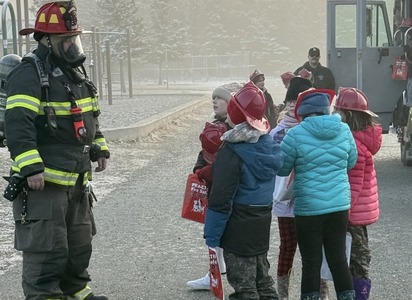
For years, the DCC and the City worked together to expand fire protection throughout the greater Delta area. The DCC helped secure state capital improvement funding while working with the City to develop and equip rural fire stations, including facilities serving the Clearwater and Richardson Highway areas. Those projects were not about choosing between city residents and rural residents. They were about protecting Delta families.
The same principle applies to roads. Maintaining local roads outside the state highway system is difficult and expensive, yet cooperation and state funding have helped improve roads connecting farms, homes, and businesses with Delta Junction. A road serves the farmer hauling equipment, the parent taking a child to school, the business receiving a delivery, and the emergency responder trying to reach a family in need.
Infrastructure does not ask which side of town we live on. It simply serves us.
Perhaps the clearest recent reminder of what is possible came during the crisis surrounding emergency medical services. In 2024 and 2025, the future of EMS in our region was uncertain, but representatives of the DCC, City of Delta Junction, Fort Greely, and local medical professionals came together to discuss how emergency services could continue serving the region.
The City of Delta Junction played a central role in keeping ambulance service available during that period. The City entered into an emergency medical services agreement with Rural Alaska Emergency Services and Delta Medical Transport for the period from April 1, 2025, through March 31, 2026, while working to maintain continuity of service and preserve its mutual-aid relationship with Fort Greely.
That commitment continued into the next phase of the community's EMS solution. The City awarded the ambulance service contract to Big Delta Rescue, effective April 1, 2026. The City's own emergency-services information now identifies Big Delta Rescue as the community's ambulance provider and notes that the City provides around-the-clock dispatch.
The DCC also stepped forward, contributing $75,000 and establishing a matching challenge to help support the transition toward a sustainable, community-based EMS model.
The important point is not which organization deserves the most credit. The important point is that both the City and the DCC recognized that the community needed a solution and contributed to making one possible.
We are capable of solving hard problems when we stop asking who gets the credit and start asking what our neighbors need.
There is an even larger reason why cooperation between the DCC and the City matters. The people of greater Deltana have long shared concerns about mandatory borough formation and the possibility of additional layers of government and taxation being imposed on our community.
If we want to preserve local decision-making and maintain the ability of Delta residents to determine their own future, we will need more than political factions. We will need to work across the boundaries that have divided us.
That means the DCC and the City must be able to work together even when they disagree on other issues. It means city and rural residents must recognize that an issue affecting one part of Deltana can eventually affect all of us. And it means we cannot afford to divide ourselves based on where someone lives, how long they have lived here, who they supported, or which institution they trust.
If borough formation and increased taxation are challenges we hope to face together, then we must first learn to work together.
Compromise is sometimes treated as weakness. It isn't.
Compromise does not mean abandoning principles. It means recognizing that other people have principles, too. It means listening long enough to understand why someone disagrees with you and being able to say, "I still disagree, but I understand your concern." Sometimes it means accepting an imperfect solution because it is better for the community than allowing disagreement to prevent any solution at all.
The DCC and the City have demonstrated this kind of cooperation through fire protection, road improvements, emergency medical services, and regional advocacy. These accomplishments did not happen because everyone involved agreed on everything. They happened because people found common ground where it mattered.
We should expect that same spirit from our community leadership today.
Imagine if the next chapter of Delta politics were not defined by finding someone to blame or deciding who is sufficiently "local" to have a voice. Imagine if disagreement did not automatically mean opposition, and if City Hall and the DCC regularly sat at the same table, not only when there was a crisis, but before one developed.
Imagine community leaders sharing information instead of guarding it, and residents being encouraged to participate because they care about Delta rather than being judged by how long they have lived here.
That is the community we should be building.
A strong community does not require everyone to think alike. We will continue to disagree about taxes, services, development, infrastructure and the role of government. Those differences are healthy when we can debate them without turning our neighbors into adversaries.
The farmer and business owner may see a problem differently. A longtime resident and someone who arrived five years ago may have different perspectives. A city resident and a rural resident may experience government differently. Those differences can make our community stronger if we are willing to listen to one another.
There will always be another disagreement and another election. But the future of greater Deltana cannot be built around permanent political warfare. It must be built around relationships, communication, and a willingness to work together.
The DCC and the City need each other. City residents and rural residents need each other. Longtime residents and newcomers all have a place in the community.
If we want to preserve local control, protect our way of life, and resist mandatory borough formation and unwanted taxation, we cannot spend all our time fighting among ourselves.
The election is over. The arguments will eventually fade. What remains is Delta, roads that need work, emergency services that need support, families that need opportunity, businesses that need customers, and young people who need reasons to stay.
The responsibility for rebuilding this community does not belong solely to City Hall or the DCC. It belongs to all of us.
The DCC and the City should reopen regular, good-faith communication and look deliberately for projects and issues where they can work together. They should not wait for another crisis to force them to the same table. Cooperation should become part of how our community conducts its business.
Residents have a role as well. We should demand accountability from our leaders, but also demand that they listen beyond their usual circles, seek common ground, and put the long-term interests of Delta ahead of short-term political victories.
We should hold ourselves to the same standard. Before repeating an accusation, ask whether it helps solve the problem. Before dismissing a neighbor, listen. Before deciding that someone does not belong in the conversation, remember that we will all live with the consequences of the decisions made here.
There will be difficult issues ahead, including questions of taxes, services, development, and government. There may again be pressure from outside our community. If mandatory borough formation or additional taxation becomes a serious threat to local decision-making, we will need every part of greater Deltana prepared to work together.
That work begins before the next crisis.
Let the next chapter of Delta's history be defined not by who we defeated, but by what we built. Let it be defined by a City and a DCC willing to communicate, residents willing to listen, and a community determined to preserve its local voice and shape its own future.
We can disagree without becoming enemies. We can compromise without abandoning our principles. We can hold our leaders accountable without tearing our community apart.
The future of Delta will not be built by one organization, one election, or one side of an argument. It will be built by people willing to show up, listen, compromise when necessary, and work for the community we all share.
The election is over. Now the real work begins.


From breaking news to thought-provoking opinion pieces, our newspaper keeps you informed and engaged with what matters most. Subscribe today and join our community of readers staying ahead of the curve.


From breaking news to thought-provoking opinion pieces, our newsletter keeps you informed & engaged.